
The Australian Government is reforming mainstream employment services to better meet the needs of individuals, employers, communities, and the economy. Based on extensive community feedback, the government has developed a vision and framework for the future employment services system. The future system aims to give people the best opportunity to secure a meaningful well-paid job.
On this page:
While the current system works for some, others are spending more time than necessary on employment services or falling through the cracks. The current system takes a one-size-fits-all approach which means people are not receiving supports tailored to their needs.
Reform is needed to deliver a more responsive service that connects people to the right support at the right time and improves pathways to meaningful employment.
The core purpose of Australia’s employment services is to help people to find and keep a job, while supporting employers to find the workers they need. A more effective service means more Australians can participate in work, that employers trust it to meet their workforce needs, and it responds to local labour market conditions.
The vision for reform
The government’s vision for employment services reform is to deliver a system that gives people the best opportunity to secure a well-paid job.
To realise its reform vision, the government will deliver an employment service underpinned by 4 core ideals:
- employment is the primary goal
- support is meaningful, tailored and proportionate to a person’s needs
- services are high-quality and responsive
- the system is designed to continuously improve.
The employment service will be comprised of 3 service streams to match the level of support a person needs to find employment. Information about the 3 service streams – online and brief intervention, targeted provider and intensive – is available in the Shaping the future of employment services Discussion Paper.
Key program settings will also be reformed to meet the government’s vision.

Stakeholder engagement
Our engagement will involve consultation on the design and implementation of a new employment services model within the parameters set by the government. This builds on the engagement undertaken and reform principles outlined in the Employment White Paper and evidence drawn from the Select Committee Inquiry into Workforce Australia Employment Services.
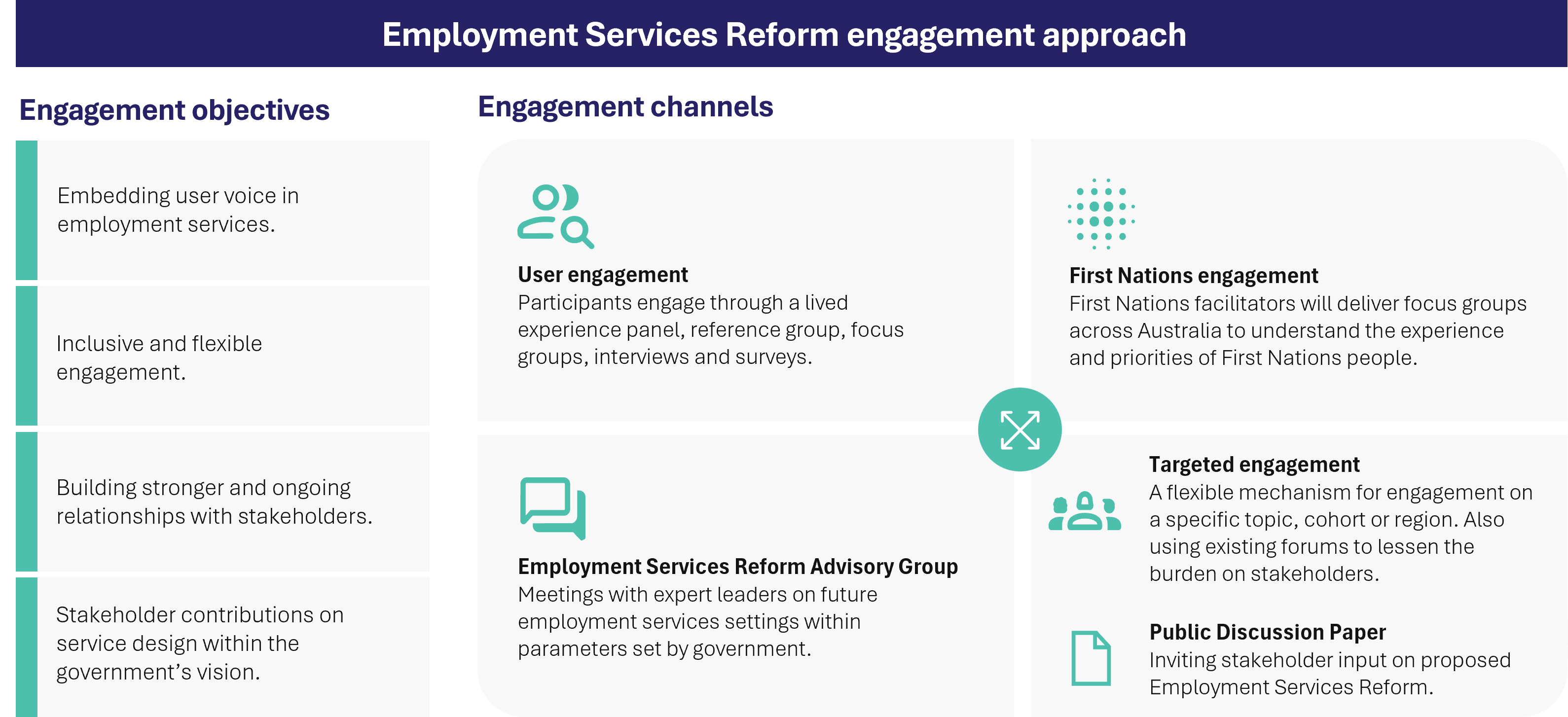
Our engagement is designed to ensure the voices and experiences of people who use employment services are central to shaping a system that is simpler, more effective, and responsive to community needs.
Users with lived experience, First Nations people, community organisations, academics, policy experts, employers, employment services providers, and peak body representatives will help shape future employment services.
How to get involved
We will be consulting and listening carefully as we design elements of the reformed employment service to ensure we get it right.
Throughout 2026, there will be opportunities to have your say and contribute to the design of the future system.
Information on consultation opportunities and how to participate will be published on this webpage.
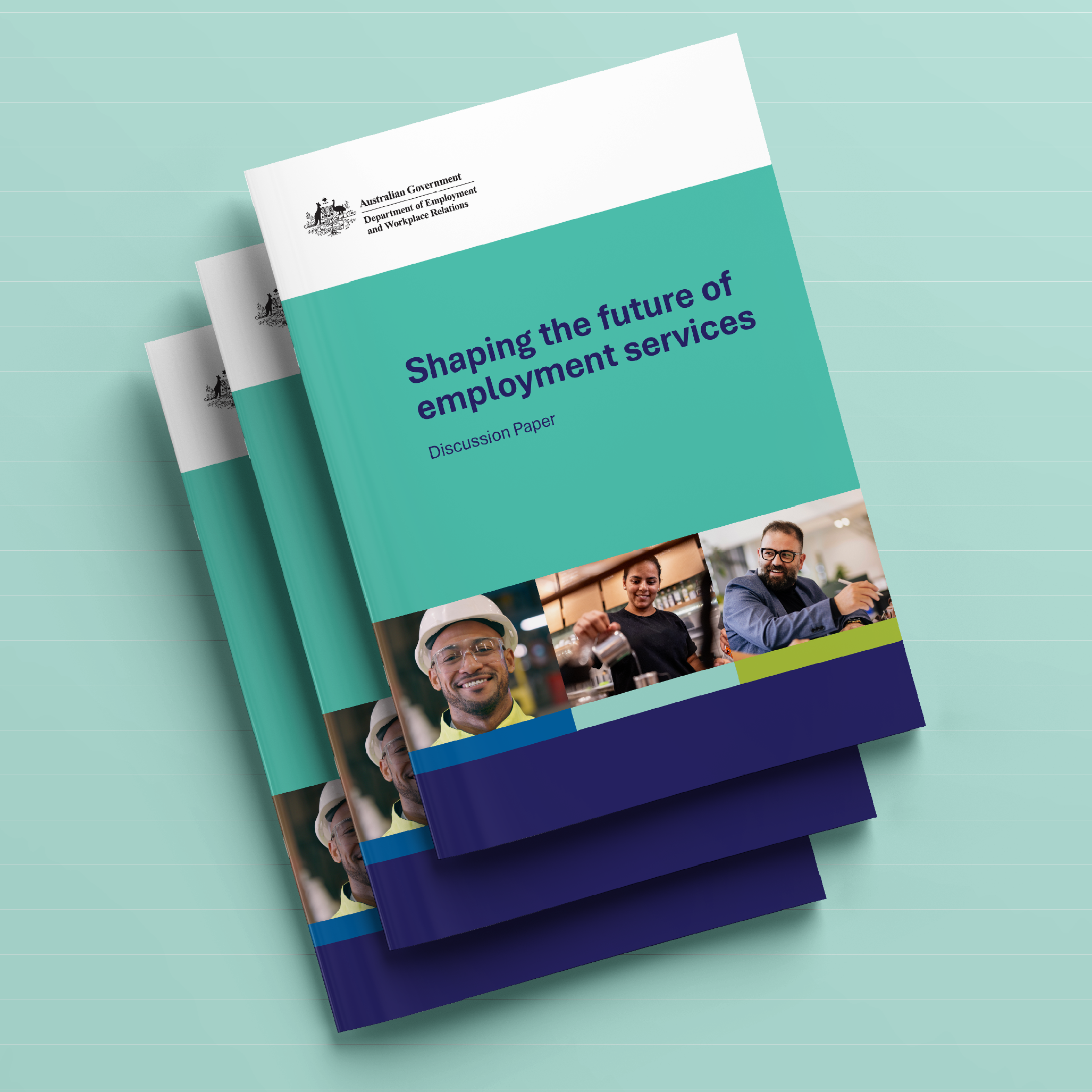
Shaping the future of employment services Discussion Paper
The department has released a discussion paper to seek public input on the detailed policy and program design of core elements of the reformed mainstream employment service. It provides an opportunity for individuals, organisations and the broader community to contribute to the design of the future system.
Easy Read and Auslan versions of Discussion Paper summary are also available.
Submissions are open from 27 May to 31 July 2026.
Expressions of Interest: Lived Experience Panel
Thank you for your interest in the Lived Experience Panel.
Expressions of Interest have now closed.
We appreciate the strong interest from people with lived experience of employment services who have applied to be part of this initiative.
The Panel will bring together insights from people with diverse backgrounds who have used employment services, helping to inform and improve the system. Selected participants may be invited to contribute through activities such as the working group, surveys or focus groups.
Further updates will be provided to applicants in due course.

Employment Services Reform Advisory Group
The Employment Services Advisory Group brings together technical expertise and practical experience from across the employment services landscape.
Working closely with the Department of Employment and Workplace Relations, the Group provides targeted advice to government to inform the design of a new employment services system that is practical, achievable and focused on better outcomes for people who use it.

Steps towards reform
The government has taken several steps to improve the system and has begun testing different approaches to delivering employment services that build on an evidence base to inform future reform. This includes other major reforms across the broader employment services ecosystem.